
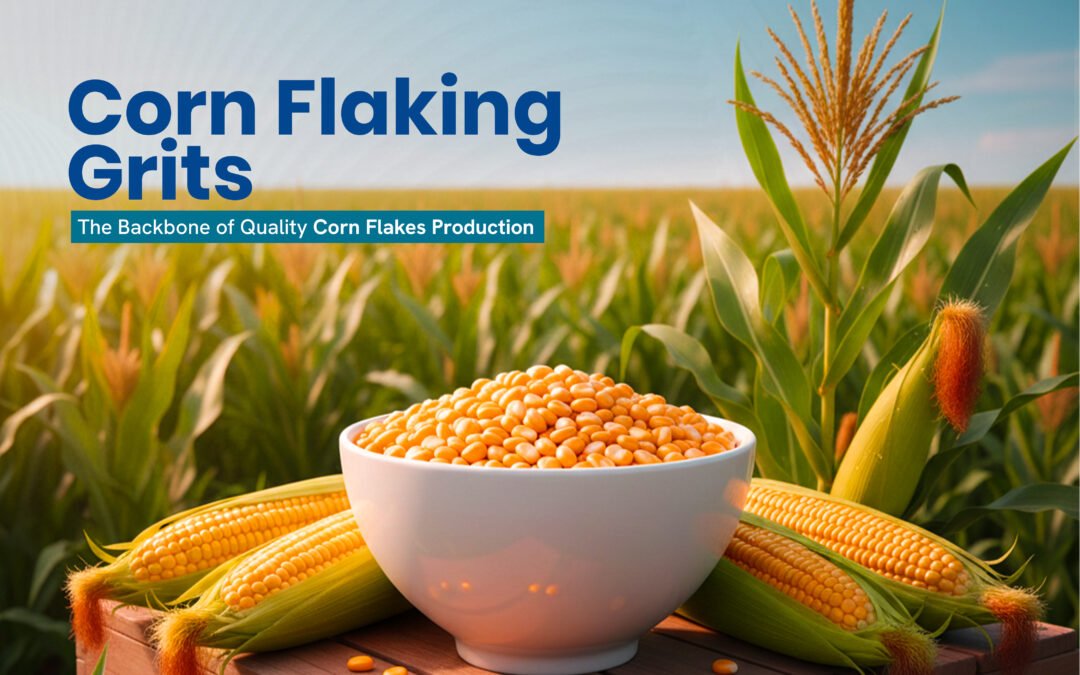
Introduction to Corn Flaking Grits
Corn Flaking Grits are an important products in the breakfast cereals and food processing industry world wide. Being the main ingredient for corn flakes and various other types of food uses, their quality factors become critical in determining texture, flavour, nutrition and plant efficiency. The increasing popularity of ready-to-eat cereals, snacks, and gluten-free products has made them an essential component for manufacturers globally.
India has proved to be a reliable source, with consistency in quality and infrastructure for milling and export. Among Indian exporters, Nutrichfoods stands out as a trusted name for premium corn flaking grits.
What Are Corn Flaking Grits?
Corn flaking grits are coarsely milled, degermed fractions of maize, specifically processed to meet the requirements of flaked cereal production. Unlike regular cornmeal or fine grits, flaking grits have uniform particle size, low fat content, and controlled moisture levels. These properties ensure proper gelatinization, rolling, and toasting during corn flakes manufacturing.
The degermination process removes oil-rich germ and fibrous bran, leaving behind pure endosperm. This results in improved shelf life, better flake expansion, and consistent cooking behavior.
The Industrial Importance of Corn Flaking Grits
In industrial food processing, consistency is everything. Corn flaking grits provide manufacturers with predictable performance, high yield, and minimal processing losses. Their standardized size distribution ensures even hydration and cooking, reducing downtime and improving production efficiency.
For large-scale cereal plants, using premium flaking grits means fewer rejects, superior flake integrity, and enhanced consumer acceptance.
Understanding the Corn Grits Manufacturing Process
Raw Material Selection – The Role of Premium Maize
High-quality corn flaking grits begin with carefully selected maize. Hard, mature yellow corn varieties with high starch content are preferred. Factors such as kernel hardness, moisture content, and absence of mycotoxins are critical during procurement.
The Degermination and Milling Process
Degermination is the heart of corn grits production. The maize kernels are cleaned, conditioned, and mechanically separated to remove germ and bran. The remaining endosperm is milled into grits of varying sizes. For flaking grits, precision milling ensures optimal granulation.
Sieving, Sorting, and Quality Testing
Post-milling, grits are sieved to achieve uniform particle size. Advanced sorting systems eliminate impurities, discoloration, and off-grade material. Rigorous quality testing is conducted for moisture, fat content, microbiological safety, and particle distribution.
Key Applications of Corn Flaking Grits
Corn Flakes and Breakfast Cereal Manufacturing
The primary use of corn flaking grits is in corn flakes production. Their ability to cook evenly, absorb flavors, and form crisp flakes makes them ideal for breakfast cereals.
Snack Foods and Extruded Products
Corn flaking grits are widely used in extruded snacks, corn chips, pellets, and ready-to-fry products. They provide excellent expansion, crunch, and neutral flavor.
Brewery and Distillery Uses
In brewing and distilling, corn grits serve as an adjunct, contributing fermentable carbohydrates while maintaining clarity and flavor stability in beer and spirits.
Nutritional Benefits and Functional Properties
Energy Value and Digestibility
Corn flaking grits are rich in carbohydrates, providing quick energy. Their refined nature improves digestibility, making them suitable for a wide range of consumers, including children and the elderly.
Gluten-Free and Allergen-Free Advantages
Naturally gluten-free, corn flaking grits are ideal for gluten-sensitive consumers and clean-label formulations. They are also free from common allergens, supporting specialized dietary requirements.
Global Market Overview of Corn Flaking Grits (2026)
The global corn grits market is expected to grow steadily in 2026, driven by rising cereal consumption, urbanization, and demand for convenient foods. Emerging markets in the Middle East, Africa, and Southeast Asia are witnessing increased imports of corn flaking grits for local cereal manufacturing.
India’s competitive pricing, scalable production, and compliance with international quality standards position it as a key exporter in the global supply chain.
Nutrichfoods: Leading Corn Flaking Grits Exporter
About Nutrichfoods Export
Nutrichfoods is a reputed Indian exporter specializing in high-quality corn flaking grits and other maize-based ingredients. With a focus on quality, consistency, and customer satisfaction, the company caters to global food manufacturers.
Product Quality and Technical Specifications
Nutrichfoods’ corn flaking grits are produced using advanced milling technology and strict quality controls. Key specifications include low fat content, uniform granulation, optimal moisture levels, and excellent cooking performance.
Global Presence and Export Capabilities
The company exports to multiple international markets, including the Middle East, Africa, Europe, and Asia. Strong logistics partnerships ensure timely delivery and product integrity.
Why Choose Nutrichfoods Export as Your Trusted Supplier
Nutrichfoods combines technical expertise, transparent sourcing, competitive pricing, and reliable after-sales support, making it a preferred partner for long-term supply contracts.
Packaging, Storage, and Shelf Life Considerations
Bulk Packaging Standards
Corn flaking grits are typically packed in food-grade PP bags, multi-layer paper bags, or jumbo bags, depending on customer requirements.
Safe Transportation and Moisture Control
Proper moisture control during storage and transport is essential to prevent spoilage and caking. Nutrichfoods ensures hygienic packaging and moisture-resistant handling practices.
Sustainability in Corn Grits Production
Eco-Friendly Processing Practices
Modern milling facilities focus on energy efficiency, reduced water usage, and minimal waste generation.
Waste Management and Resource Efficiency
By-products such as corn germ and bran are utilized in animal feed and oil extraction, supporting a circular economy and reducing environmental impact.
How to Source High-Quality Corn Flaking Grits from India
Quality Certification and Testing Parameters
Buyers should look for suppliers with ISO, HACCP, and FSSAI compliance, along with in-house laboratories for quality assurance.
Export Documentation and Compliance
Reliable exporters provide complete documentation, including COA, phytosanitary certificates, and country-specific compliance support.
Frequently Asked Questions (FAQs)
Q1: What makes corn flaking grits suitable for corn flakes production?
Corn flaking grits have uniform particle size, low fat content, and controlled moisture, which allow even cooking, proper gelatinization, and consistent flake formation during the rolling and toasting process.
Q2: How are corn flaking grits different from regular corn grits or cornmeal?
Corn flaking grits are specially degermed and milled for industrial use, whereas regular corn grits or cornmeal may contain higher fat content, uneven granulation, and are intended for household or culinary applications.
Q3: Are corn flaking grits gluten-free?
Yes, corn flaking grits are naturally gluten-free, making them suitable for gluten-sensitive consumers and for manufacturers producing gluten-free cereals and snack foods.
Q4: What is the typical shelf life of corn flaking grits?
When stored in cool, dry conditions and packed in moisture-resistant packaging, corn flaking grits generally have a shelf life of 9 to 12 months.
Q5: Can corn flaking grits be used in applications other than breakfast cereals?
Yes, they are widely used in extruded snacks, corn chips, pellets, brewing, distilling, and ready-to-fry snack products due to their excellent starch content and cooking performance.
Q6: What quality certifications should buyers look for when sourcing corn flaking grits from India?
Buyers should prefer suppliers with ISO, HACCP, FSSAI, and relevant export certifications, along with proper testing for moisture, fat content, microbiological safety, and particle size distribution.
Q7: What packaging options are available for export shipments?
Corn flaking grits are commonly packed in 25 kg or 50 kg food-grade bags, with jumbo bags available for bulk buyers, depending on export and customer requirements.
Conclusion: Partner with Nutrichfoods for Premium Corn Flaking Grits
Corn flaking grits are the foundation of high-quality corn flakes and numerous food products. Choosing the right supplier ensures consistent performance, food safety, and long-term business success. With its commitment to quality, sustainability, and global standards, Nutrichfoods is your ideal partner for sourcing premium corn flaking grits from India.
Stay updated — follow us on Facebook!