
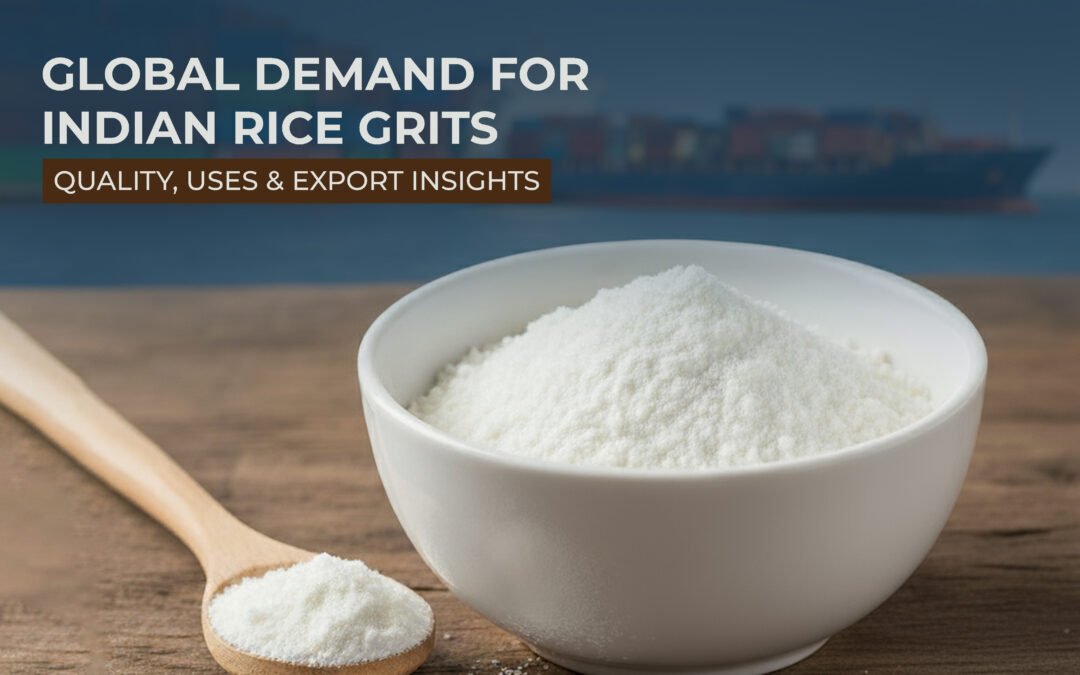
The global food industry constantly evolves, shaped by changing consumer preferences, industrial requirements, and regional supply chains. Among the many cereal-based raw materials that have gained momentum, rice grits have emerged as a versatile and valuable product in food, feed, and brewing industries. India, being one of the largest producers of rice in the world, plays a key role in meeting this growing demand. With advanced milling technologies and a robust export ecosystem, Indian companies such as Nutrich Foods are leading the charge in supplying high-quality rice grits to destinations like Sri Lanka, Saudi Arabia, the Gulf, Fiji, New Zealand, Malaysia, Indonesia, Vietnam, and Cambodia.
Understanding Rice Grits
Rice grits, sometimes referred to as broken rice groats or rice meal, are produced through the controlled milling of rice grains. During milling, whole grains are broken into small uniform pieces while retaining much of their nutritional value. Unlike rice flour, which is finely ground, rice grits maintain a coarser texture, making them ideal for numerous industrial and culinary applications.
The composition of rice grits includes carbohydrates, proteins, minute fats, and essential minerals. They are gluten-free and non-allergenic, which makes them suitable for both human consumption and industrial use. Depending on the process, rice grits can be made from polished rice or unpolished rice to meet diverse requirements.
Rice Grits and Their Uses Across Industries
Rice grits are used in a wide spectrum of industries around the world. Some of the major applications include:
1. Food Products: Rice grits are commonly used in breakfast cereals, bakery products, extruded snacks like chips, cracker, instant porridges, and traditional dishes. Their neutral taste and light texture make them compatible with various recipes and flavorings. In many countries, rice grits are also used as baby food ingredients due to their smooth digestibility.
2. Brewing Industry: Brewers widely use rice grits as an adjunct in beer production. It provides fermentable sugars without overpowering the flavor, improving the clarity and crispness of the final brew. Many breweries prefer Indian rice grits because of their consistent quality and stable gelatinization properties during fermentation.
3. Animal Feed: Rice grits are also an important component of poultry, cattle, and aquatic feeds. Their high energy content and low fiber composition make them a cost-effective alternative to corn or wheat-based feed ingredients.
4. Industrial Use: Beyond the food and feed industries, rice grits find limited use in fermentation industries, starch extraction, and other value-added food processing applications.
Why Indian Rice Grits Are in Global Demand
There are several reasons behind India’s strong position as a global supplier of rice grits:
Abundant Raw Material: India is among the largest producers of paddy rice, ensuring a continuous and reliable supply of raw material for grit milling.
Infrastructure: Indian manufacturers like Nutrich Foods use automated corn and rice milling systems, ensuring uniform particle size, minimal breakage loss, and superior product consistency.
Quality Standards: International buyers prefer Indian rice grits for their adherence to strict quality protocols such as ISO and FSSAI certifications.
Cost Efficiency: Competitive pricing and efficient logistics make Indian exporters attractive for global buyers seeking both quality and cost advantages.
Customized Packaging: Exporters offer rice grits in various grades and packaging options depending on client needs—ranging from 25 kg bulk bags to 1000 kg jumbo sacks.
Export Markets and Global Trends
The global rice grit market is expanding, supported by the growth of ready-to-eat food sectors, brewing demand, and livestock feed production.
South Asian Markets (Sri Lanka, Vietnam, Indoensia, Cambodia): These regions use rice grits primarily for traditional foods, instant porridge mixes, and as feed material. Proximity to India allows for cost-effective supply chains.
Middle East and Gulf (Saudi Arabia, UAE, Oman): In these markets, rice grits serve both human food and industrial blending purposes. Demand is particularly high from food processing units and breweries.
Oceania and Pacific (New Zealand,PNG, Fiji): Growing awareness of gluten-free options and sustainable agriculture practices has created steady demand for Indian rice grits as an alternative to wheat and corn-based products.
Southeast Asia (Malaysia, Indonesia): The snack foods and cereal processing industries in these countries actively seek high-quality grits for use in extrusion and breakfast manufacturing lines.
The Manufacturing and Quality Assurance Process
At Nutrich Foods, the production of rice grits involves meticulous quality control and modern milling techniques. The process begins with the selection of premium-grade rice sourced directly from Indian farmers. Once received, the rice undergoes several cleaning stages to remove impurities such as stones, husk residues, and dust.
Next, the rice is subjected to controlled milling and size reduction using precision machinery. The result is rice grits of uniform size and color, preserving both taste and nutrition. A dedicated quality team inspects every batch for moisture content, purity, texture, and microbial safety. After passing stringent checks, the grits are packaged under hygienic, food-safe conditions and prepared for export.
Such practices ensure that the rice grits maintain a shelf life of up to 12 months under proper storage conditions, making them a reliable choice for international buyers.
Sustainability and Ethical Sourcing
As sustainability becomes central to modern supply chains, Indian rice grit exporters are focusing on environmentally conscious practices. By partnering with local farming communities, companies promote responsible cultivation methods and reduce wastage from the rice milling process. The byproducts such as husk and bran are further utilized for renewable energy or animal feed applications, contributing to a circular agricultural economy.
Nutrich Foods, in particular, integrates eco-friendly packaging materials and energy-efficient milling equipment, minimizing the carbon footprint associated with production and transportation.
Quality, Packaging, and Logistics Advantage
For exporters, consistency of quality and reliability of delivery are as vital as price. Indian rice grits suppliers balance these priorities effectively through:
On-site quality testing laboratories.
Standardized moisture-controlled storage facilities.
Flexible packaging (polypropylene bags, paper sacks, BOPP Bags).
Fast logistics support through major Indian ports like Mundra, Nhava Sheva, and Chennai.
This seamless export readiness allows companies like Nutrich Foods to maintain timely deliveries across markets, whether for small-scale food manufacturers or bulk distributors.
Future Outlook: Growth in Global Rice Grit Market
The rice grit export market is poised for consistent growth over the next decade. With consumers turning toward gluten-free and plant-based diets, rice-derived ingredients are gaining prominence. Additionally, the rise in brewery expansion in Southeast Asia and Africa presents new avenues for Indian exporters.
Further integration of digital platforms and traceability technologies will enable exporters to ensure transparency, from farm sourcing to container dispatch. The government’s support for agricultural exports, under the Make in India and One District One Product (ODOP) initiatives, provides additional impetus.
As demand scales up, Indian rice grit exporters can also diversify product offerings, such as fortified rice grits enriched with vitamins and minerals for the nutrition-driven food markets.
Conclusion
The story of Indian rice grits encapsulates a balance between tradition and technology. What once began as a byproduct of rice milling has become a high-value commodity catering to industries worldwide. With its strategic production capacity, commitment to quality, and expanding export network, India stands well-positioned as the global hub for rice grit exports.
As consumers and manufacturers seek sustainable, reliable, and nutritious grain-based solutions, companies like Nutrich Foods will continue to strengthen India’s presence in global supply chains — delivering not just rice grits, but assurance of quality from crop to container.