
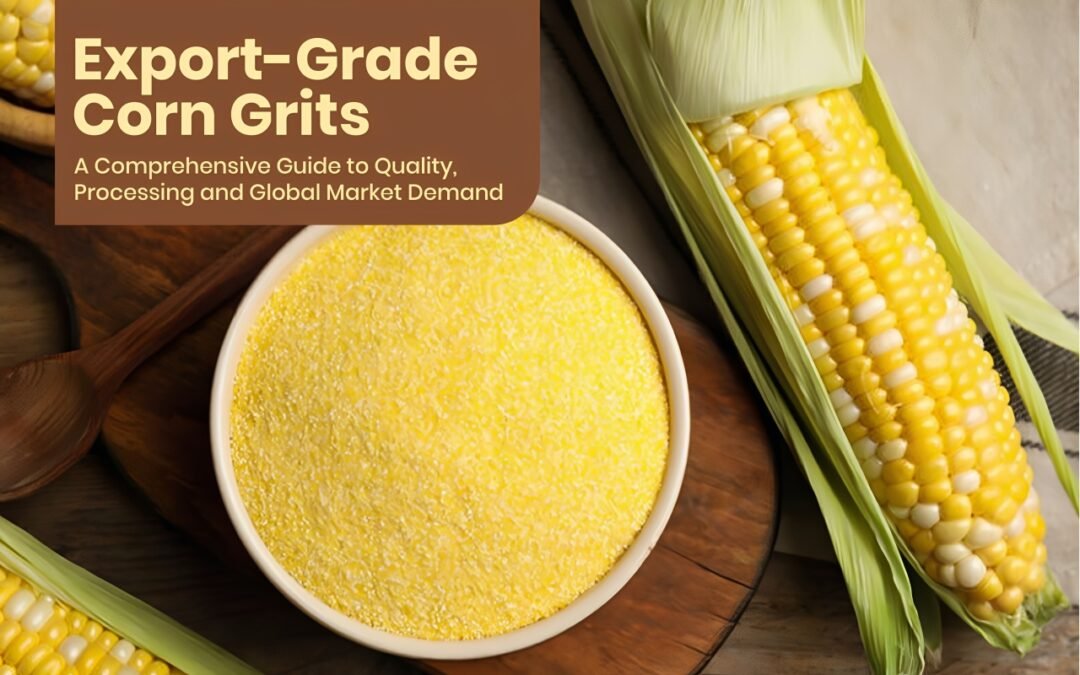
Corn grits are one of the fastest-growing agricultural export commodities worldwide, prized for their versatility in food, feed, and industrial applications. Exporters in major producing countries like India have capitalized on increasing demand from both developing and developed markets. With their neutral flavor, consistency, high energy value, and competitive pricing, export-grade corn grits are sought after by manufacturers of snacks, cereals, animal feed, breweries, and food processors. This article explores quality standards, processing techniques and packaging practices across key global markets including Malaysia, Indonesia, Vietnam, Cambodia, Fiji, Sri Lanka, Saudi Arabia, the Gulf region, and Dubai.
Understanding Export-Grade Corn Grits
Corn grits are coarsely ground maize kernels, where the germ and bran have been removed, leaving the endosperm in granules. As a processed food ingredient, corn grits vary in particle size—from coarse (used in grits and porridges) to medium or fine (used for extruded snacks and cereals). They can be classified as food grade (for human consumption) or feed grade (for animal nutrition).
Key attributes that define export-grade corn grits include:
- Moisture Content – Usually ≤ 13–14%, helping prevent microbial growth and ensure shelf stability.
- Low Foreign Matter – Strict limits on impurities, dust, and extraneous material (typically under 1–2%).
- Minimal Broken Kernels – Keeping breakage low ensures uniformity and better processing performance downstream.
- Aflatoxin Levels Within Limits – Aflatoxins are regulated mycotoxins; meeting disposal thresholds (often ≤ 20 ppb depending on country standards) is critical.
- Purity and Color – A bright, uniform yellow color and high purity (98–99%) are preferred by food processors.
These criteria are essential because importers—not merely bulk buyers—evaluate quality based on inspection certificates and lab tests before purchasing. Exporters must ensure documentation and traceability accompany every shipment.
The Processing Journey: From Farm to Export Pallet
Export-grade corn grits manufacturing involves multiple hygienic and quality-controlled steps, each critical to meeting global buyer specifications:
Raw Material Procurement
The journey begins with selecting high-quality maize from trusted farms with consistent grain quality. Preferred varieties are those with high starch content and minimal pest damage.
Conditioning and Drying
Once harvested, corn is dried to optimal moisture levels (≤ 13–14%). Proper moisture control prevents fungal growth and retains product quality during storage and transit.
Cleaning and Sorting
Mechanical cleaners remove stones, dirt, and light materials. Advanced sorter machines ensure removal of foreign matter and damaged kernels, improving overall purity.
Dehulling and Degermination
The outer hull and germ are removed to produce a cleaner endosperm. This reduces oil content, extends shelf life, and improves stability—especially for food applications.
Milling and Grading
The cleaned corn is milled and categorized into various grit sizes (coarse, medium, fine). Precision in grinding ensures uniformity—a critical requirement for processors using corn grits in snacks, cereals, or brewing.
Quality Testing
Before packaging, samples undergo rigorous laboratory testing for moisture, aflatoxin levels, foreign matter, and physical defects. Tests may be performed by third-party laboratories to qualify for importer-mandated standards.
Certifications
Exporters routinely secure:
- Phytosanitary Certificates
- Certificate of Origin
- Non-GMO or GMO status documents
- Health & Safety Certificates
- ISO, Halal (where applicable)
These documents verify compliance with destination country standards and trade rules.
Packaging for Global Trade
Proper packaging plays a dual role: preservation and compliance with importing country requirements.
Standard Export Packaging Formats
- 25 kg and 50 kg polypropylene (PP) woven bags – Typical for bulk orders and easy handling.
- Jumbo bags (500–1000 kg) – For large commercial buyers and industrial processors.
- Vacuum-sealed or barrier packaging – Used for sensitive markets with stringent moisture and pest control regulations.
In many cases, exporters tailor packaging based on buyer preference—adding private labels, multi-language labeling, and branding per customer instructions.
Containerization and Logistics
Bulk shipments can be containerized (e.g., 20′ or 40′ containers), with shipments protected against humidity, heat, and pests. Logistics planning includes consideration of transit times for global markets, especially for destinations like Fiji or the Gulf where sea transport routes vary.
Standard Incoterms (CIF, FOB, CFR) define responsibility for freight, insurance, and delivery terms.
Global Demand and Buyer Intent: Focus Markets
Southeast Asia: Malaysia, Indonesia, Vietnam, Cambodia
Southeast Asia has a rapidly expanding food processing and feed industry:
- Malaysia & Indonesia: Rising demand for convenience foods, extruded snacks, and animal food manufacturing creates stable demand for food-grade and feed-grade corn grits. Importers seek consistent supply with rigorous quality documentation, ISO standards, and minimal moisture. European-style snack producers particularly demand uniform grit sizes.
- Vietnam: A fast-growing economy with expanding agriculture feed and industrial food processing sectors. Indian corn grits, with advanced cleaning and consistent granulation, are preferred due to their reliability and cost competitiveness. Exporters routinely tailor shipments to feed mills, bakery chains, and snack manufacturers.
- Cambodia: While still a smaller market compared to Malaysia or Vietnam, demand is emerging, especially for poultry feed and traditional food applications as local processing capacity increases.
In these markets, buyers prefer non-GMO options and value certifications (HACCP, ISO) that demonstrate international compliance.
South Asia & Oceania: Sri Lanka and Fiji
- Sri Lanka: A consistent importer of Indian maize and grits, largely driven by animal feed producers and food processors. Importers often emphasize quality traceability, stable supply, and competitive pricing given currency fluctuations and import cost pressures.
- Fiji: Although a smaller market, Fiji imports premium export-grade corn grits for food processing (cereals, snacks) and livestock feed. Being island logistics dependent, buyers strongly emphasize packaging integrity and timely delivery.
Both markets look for stable supply chains due to their strategic reliance on food imports.
Middle East: Saudi Arabia, Gulf Countries and Dubai
The Gulf region and especially Dubai represent high-value opportunities:
- Saudi Arabia and Gulf: With robust livestock and poultry industries, feed demand is strong. Buyers also use corn grits in industrial food processing and pet food sectors. The Gulf’s regulatory environment often requires strict adherence to food safety protocols (Halal certification, low aflatoxin levels, moisture control).
- Dubai: As a commercial hub, Dubai represents not just an end-market but a redistribution point to other Middle Eastern and African countries. Importers in Dubai seek highly consistent, certified products, with emphasis on flexible logistics and competitive pricing. Indian corn grits’ reliability in meeting drying, grading, and packaging norms makes them preferred choices for Dubai’s importers.
Export Documentation & Compliance
Export success hinges on meticulous documentation that satisfies both Indian export regulations and destination import norms. Typical documents include:
- Commercial Invoice & Packing List
- Bill of Lading
- Phytosanitary Certificate
- Certificate of Origin
- Health & Non-GMO Certificates
- Certificate of Analysis showing compliance with moisture, aflatoxin, and foreign matter limits.
Additionally, exporters must properly classify products under relevant HS codes, such as:
- 11031300 – Cereal groats, meal, and pellets of maize
- 10059000 – Maize (corn) for export shipments.
Meeting each importing country’s specific requirements—particularly on residue limits for mycotoxins and pesticide maximum residue levels (MRLs)—is essential for clearing customs without delays.
Challenges & Opportunities
Challenges
- Stringent Regulatory Requirements: Some markets maintain strict standards for aflatoxin levels, moisture, and foreign materials. Exporters must align their quality assurance systems accordingly.
- Logistics & Transit Delays: Especially for island markets like Fiji or remote buyers, reliable logistics partners and timely shipments are critical.
- Price Volatility: Commodity pricing fluctuates with global maize production cycles and freight costs, affecting buyer commitments.
Opportunities
Despite challenges, opportunities abound:
- Value-Added Products: With rising consumer demand for snacks and breakfast cereals, higher-margin corn grits (food-grade) are increasingly attractive.
- Custom Specifications: Offering tailored grit sizes, packaging formats, and certified non-GMO options enhances market competitiveness.
- Emerging Markets: Growing economies in Asia and the Middle East continue to diversify their food and feed industries, boosting demand for consistent corn grits supply.
Conclusion
Export-grade corn grits have evolved from a raw bulk commodity to a sophisticated value-added exported product meeting strict international quality and safety criteria. Their demand in Malaysia, Indonesia, Vietnam, Cambodia, Fiji, Sri Lanka, Saudi Arabia, the Gulf, and Dubai reflects the global trend towards diversified food processing, industrial use, and animal feed production.
For high-quality export-grade corn grits and reliable global supply, visit Nutrich Foods.
For successful export operations, suppliers must combine rigorous processing, certified quality standards, robust packaging, and responsive documentation with market-specific insights to satisfy the diverse needs of buyers across these regions. With such alignment, corn grits exporters can unlock long-term partnerships and sustainable growth in the vibrant global agro-commodity market.