
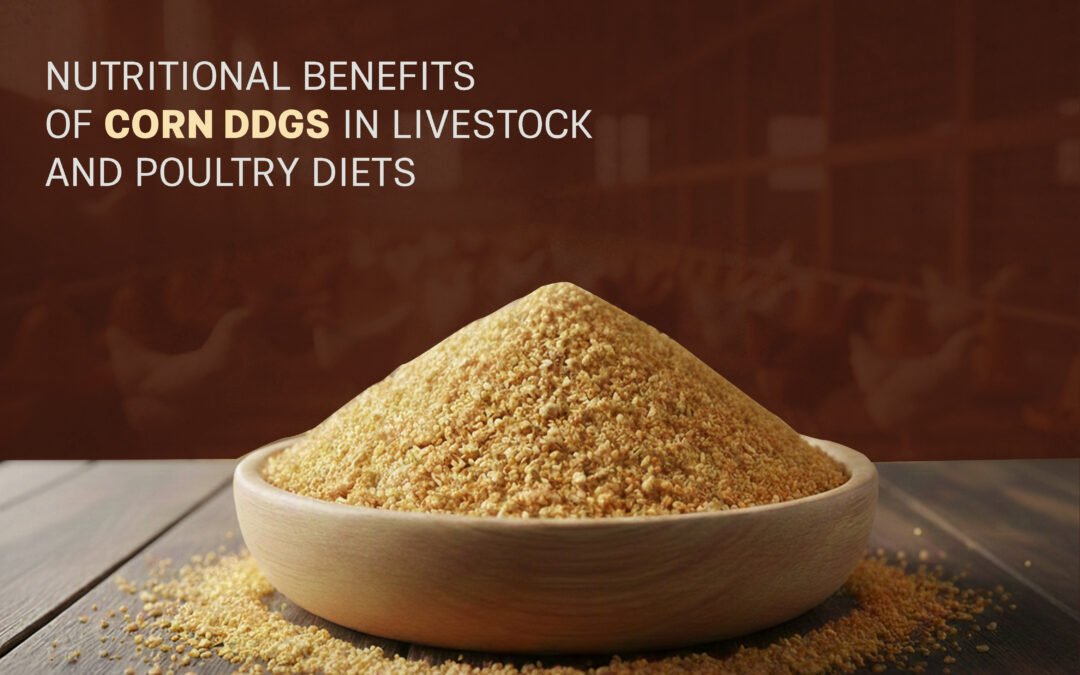
Introduction: The Rise of Corn DDGS as a Global Feed Staple
In the ever-evolving world of animal nutrition, finding a balance between cost, quality, and sustainability is paramount for farmers and feed manufacturers. Enter Corn Distillers Dried Grains with Solubles (DDGS)—a powerhouse byproduct of the ethanol production industry that has transformed from a mere waste product into a sought-after protein source. Derived from the fermentation of corn starch to produce biofuel, DDGS captures the nutrient-rich remnants, offering a concentrated blend of protein, fiber, and energy that rivals traditional feeds like soybean meal.
For exporters like those at Nutrich Foods in India, DDGS represents not just a commodity but a gateway to global markets. With shipments flowing to high-demand regions such as Indonesia, Vietnam, and Sri Lanka, Indian-sourced DDGS is gaining traction due to its competitive pricing, consistent quality, and adaptability to diverse livestock needs. This article delves into the nutritional benefits of Corn DDGS, exploring its applications in poultry, ruminants, and swine diets. We’ll uncover why it’s a game-changer for productivity, health, and profitability, backed by scientific insights and practical examples from Asian farming contexts. Whether you’re a poultry producer in Jakarta or a dairy farmer in Colombo, understanding DDGS can optimize your feed strategies and boost animal performance.
The Nutritional Profile: What Makes Corn DDGS a Feed Superstar?
At its core, Corn DDGS is a dehydrated co-product consisting of the non-starch components of corn kernels—primarily the bran, germ, and leftover proteins after ethanol extraction. A typical batch boasts 25-30% crude protein, 8-12% fat, 35-40% neutral detergent fiber (NDF), and a metabolizable energy value of around 3,200-3,500 kcal/kg for poultry. These figures make it an energy-dense option, but it’s the synergistic nutrient package that sets DDGS apart.
Protein Powerhouse: DDGS provides highly digestible proteins rich in essential amino acids like lysine (0.7-0.9%) and methionine (0.4-0.6%), crucial for muscle development and immune function. Unlike some plant-based feeds, its protein is balanced for monogastrics (poultry and swine), reducing the need for synthetic supplements. Studies from the University of Illinois show that DDGS can replace up to 30% of soybean meal in broiler diets without compromising growth rates, thanks to its ruminal undegradable protein (RUP) content—ideal for ruminants like dairy cows where it enhances milk yield by 5-10%.
Fiber and Energy Balance: The high fiber (soluble and insoluble) supports gut health, acting as a prebiotic to promote beneficial microbes. In poultry, this translates to better litter quality and reduced coccidiosis risks. For energy, the residual corn oil delivers unsaturated fats, improving feed palatability and absorption. In hot climates like those in Vietnam’s Mekong Delta, this lipid content helps mitigate heat stress by providing quick-release calories.
Minerals and Vitamins: DDGS is naturally fortified with phosphorus (0.7-0.9%, mostly phytate-bound but bioavailable in non-ruminants), sulfur (0.4%), and trace minerals like zinc and manganese. These support bone health and antioxidant defenses, particularly vital in intensive farming systems prevalent in Indonesia’s broiler belts.
However, quality varies—Indian exporters like Nutrich Foods ensure premium DDGS through rigorous mycotoxin testing (e.g., aflatoxin <20 ppb) and consistent moisture levels (<12%). Sourced from ethanol plants in Maharashtra and Uttar Pradesh, their product is packaged in bulk or PP bags for seamless export, maintaining nutrient integrity during sea voyages to Southeast Asia.
Applications in Poultry Diets: Boosting Growth and Egg Production
Poultry farming dominates Asian agriculture, with Indonesia producing over 3 billion broilers annually and Vietnam’s layer industry expanding rapidly. Here, Corn DDGS shines as a versatile ingredient, addressing the protein-energy gap in corn-soy formulations.
In broiler production, incorporating 15-20% DDGS improves feed efficiency by 3-5%, per research from the Asian-Australasian Journal of Animal Sciences. The xanthophylls (natural pigments) in DDGS enhance yolk color, a premium trait for Sri Lankan egg exporters targeting Middle Eastern markets. A case study from a Vietnamese farm near Hanoi replaced 25% of its corn with DDGS, resulting in 8% faster weight gain to market age (42 days) and lower feed conversion ratios (FCR) from 1.8 to 1.65. This isn’t just about numbers—healthier birds mean fewer veterinary interventions, cutting costs by up to 15%.
For layers, DDGS at 10-15% inclusion supports peak egg production. Its phosphorus aids eggshell strength, reducing cracks in high-output flocks. In Indonesia’s humid tropics, the fiber helps prevent fatty liver syndrome, a common issue in caged hens. Nutrich Foods’ DDGS, with its golden hue and low odor, integrates seamlessly into mash or pellet feeds, ensuring uniform nutrient distribution.
Challenges? Excessive inclusion (>30%) can darken meat due to Maillard reactions, but proper heat processing during production mitigates this. For Southeast Asian producers, starting with formulation trials—guided by NIR (near-infrared) analysis for precise nutrient profiling—ensures optimal results.
Enhancing Ruminant Performance: From Dairy to Beef
Ruminants, including dairy cattle and beef herds, benefit immensely from DDGS’s bypass protein and fiber matrix. In Sri Lanka’s upland pastures, where forage quality dips during dry seasons, DDGS serves as a rumen buffer, stabilizing pH and preventing acidosis.
For dairy cows, feeding 20-25% DDGS in total mixed rations (TMR) can increase milk fat by 0.2-0.4% and protein yield by 0.1-0.3 kg/day, according to Purdue University trials. This stems from its high RUP (40-50%), which escapes rumen degradation to nourish the small intestine. In Vietnam’s smallholder systems, blending DDGS with rice bran and urea has lifted lactation yields from 12 to 15 liters/cow/day, directly impacting farmer incomes.
Beef operations in Indonesia’s Sumatra region report faster finishing times (down 10-15 days) when DDGS replaces cottonseed meal at 15% levels. The energy from fats supports marbling without excessive backfat, appealing to halal export standards. Moreover, DDGS’s low lignin content ferments efficiently, yielding more volatile fatty acids (VFAs) for weight gain—up to 1.2 kg/day in crossbred steers.
Sustainability angle: As a renewable byproduct, DDGS reduces reliance on imported soy, aligning with Sri Lanka’s green agriculture push. Exporters must monitor sulfur levels (<0.4%) to avoid polioencephalomalacia, but Indian DDGS typically stays well below thresholds.
Swine Nutrition: Efficient Gains in a Competitive Market
Swine production in Asia is booming, with Vietnam as the world’s third-largest pork exporter. Corn DDGS fits perfectly, offering 3,000-3,200 kcal/kg of net energy—comparable to corn but at half the cost.
Grower-finisher pigs thrive on 20-30% DDGS diets, achieving ADG (average daily gain) of 0.85-0.95 kg with FCR under 2.5. The digestible phosphorus spares inorganic supplements, cutting environmental phosphorus runoff—a boon for Indonesia’s riverine farms. In gestation and lactation sows, DDGS’s fiber (10-12% ADF) curbs constipation, while omega-3 precursors from corn oil enhance piglet immunity.
A Thai study (adaptable to Vietnamese contexts) found 25% DDGS inclusion boosted litter sizes by 0.5 piglets, attributing it to improved maternal energy reserves. For exporters, ensuring low mycotoxins is key; Nutrich Foods’ lab-tested batches guarantee safety, with shipments arriving in Colombo ports ready for immediate milling.
Challenges, Best Practices, and Future Outlook
While DDGS excels, variability in ethanol plant processes can affect amino acid profiles—solved by blending batches and using additives like enzymes (phytase for phosphorus). In humid export routes to Southeast Asia, anti-caking agents preserve flowability in PP bags.
Best practices include gradual diet transitions (over 7-10 days) and monitoring via blood urea nitrogen (BUN) tests. For importers in Indonesia or Vietnam, partnering with reliable suppliers like Indian exporters ensures traceability from farm to feed.
Looking ahead, with global ethanol mandates rising, DDGS supply will surge 10-15% annually. In Sri Lanka, amid feed import dependencies, local fortification with DDGS could slash costs by 20%. As climate-resilient feed, it supports UN Sustainable Development Goals, making it a win for ethical farming.
Conclusion: Unlock Potential with Quality Corn DDGS
Corn DDGS isn’t just feed—it’s a strategic asset for healthier, more productive animals and profitable operations. From boosting broiler FCR in Indonesia to elevating dairy yields in Vietnam, its nutritional edge drives real results. For global buyers, sourcing from trusted Indian suppliers like Nutrich Foods means accessing premium, export-ready DDGS in bulk or bags. Ready to elevate your feed? Enquire today via WhatsApp at +00 91 96572 42222 /00918767232932 and discover how DDGS can transform your livestock enterprise.